Board-on-Board Fence Cost Per Linear Foot: 2026 Pricing Guide

Updated: Oct 24
Table of Contents
What Board-on-Board Fencing Costs: Current Pricing Breakdown
Board-on-Board Fence Materials and Labor: Where Your Money Goes
Material Costs by Wood Type
A Like-for-Like Material Takeoff
Labor and Installation Costs
How to Read the Split in a Bid
Board-on-Board vs. Side-by-Side Fence: Cost Comparison
Estimating 200 Linear Feet of Fence Cost
Step 1: Fix the Specifications
Step 2: Calculate the Material Quantities
Step 3: Price the Materials
Step 4: Estimate Labor
Step 5: Add the Scope Items Competitors Leave Out
Step 6: Compare the Totals on the Same Basis
Using a Wood Fence Cost Calculator to Plan Your Budget
Key Cost Factors That Affect Your Board-on-Board Fence Estimate
Terrain and Site Conditions
Hidden Costs and Project Add-Ons
Getting an Accurate Fence Estimate and Comparing Quotes
Frequently Asked Questions
Last Updated: October 21, 2026
What Board-on-Board Fencing Costs: Current Pricing Breakdown
A board-on-board fence cost depends on three factors: materials, labor, and site conditions. Exact expenses vary by wood type, fence height, and local labor rates.
Understanding the per-linear-foot breakdown helps you budget accurately.
At ETX Fencing, we understand that the most common question homeowners have is simple: "What will this actually cost me?"
Board-on-Board Fence Materials and Labor: Where Your Money Goes
Your total project cost splits into what you buy and what you pay to install it, the only way to compare two contractor bids fairly.

Material Costs by Wood Type
Pine is the budget-friendly alternative: less rot-resistant and needing regular staining or sealing to reach a 10-15 year lifespan, but it delivers a solid privacy fence without the premium price tag.
Pressure-treated lumber falls between the two: chemically treated to resist decay, cheaper than cedar, and typically lasting 12-18 years, though it can warp, twist, and check in humid climates.
When getting quotes, ask contractors to specify which wood they recommend and why.
A Like-for-Like Material Takeoff
The table below shows the material components in one linear foot of a 6-foot board-on-board fence so you can check a bid against it. Treat the unit counts as a planning baseline, not a bid.
Component | Typical quantity per linear foot (6-ft board-on-board) | What it does |
Pickets (1x6 or 1x4, depending on overlap) | Roughly 2.2-2.6 board feet, because the overlap pattern uses more boards than side-by-side | The visible face of the fence |
Posts (4x4 or 6x6) | About 0.125 post per linear foot at 8-ft spacing | Carry the load and resist wind |
Rails (2x4) | About 0.25-0.375 rail per linear foot for two or three rails | Tie posts and pickets together |
Concrete | Roughly 1-2 bags of 50-lb mix per post, depending on hole depth and soil | Anchor posts and resist frost heave |
Fasteners | Galvanized or stainless screws, roughly 20-30 per linear foot | Hold boards and resist corrosion |
Cap and trim (optional) | Linear feet equal to the fence run | Protect end grain and improve appearance |
To turn that takeoff into a material cost, multiply each component by your local supplier price. Pickets alone typically account for roughly half the material budget.
Labor and Installation Costs
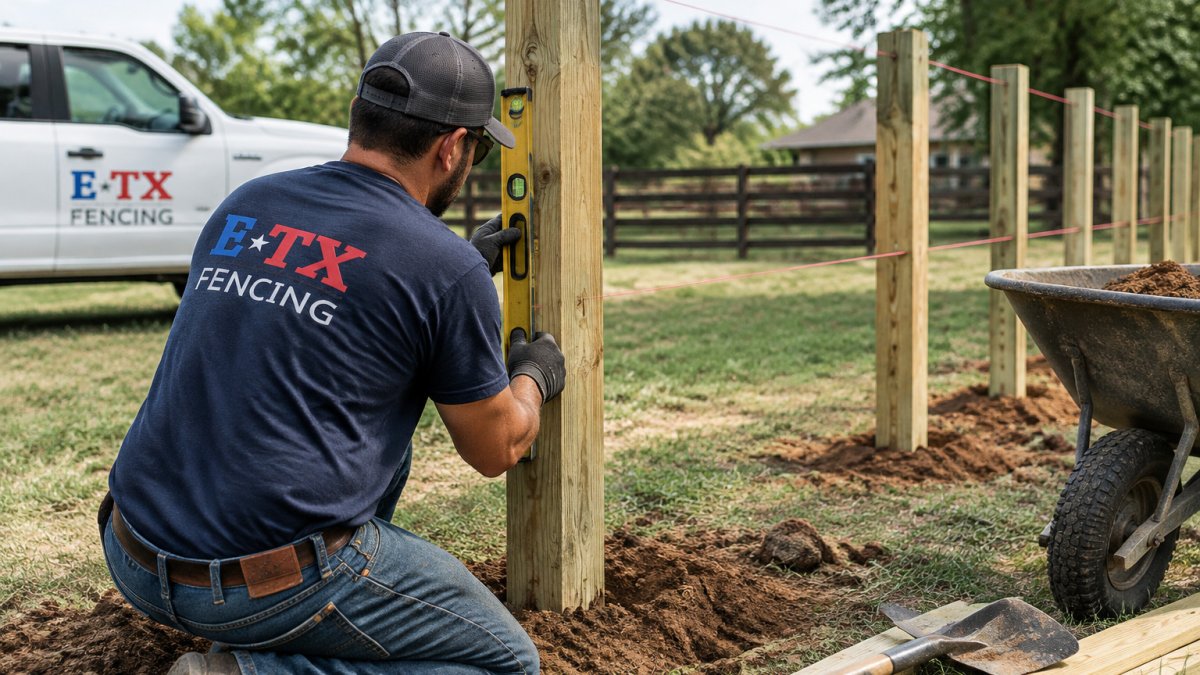
Labor typically represents 40-60% of your total project cost: digging post holes, setting posts in concrete, cutting and attaching boards, and finishing work. Level ground moves faster than sloped terrain or obstacles, so trees, rocks, or uneven ground raise labor costs. Post installation quality matters more than most homeowners realize: improperly set posts cause a fence to lean or fail within a few years, while proper installation means digging below the frost line where one applies, using concrete, and allowing it to cure.
Watch Out Contractors who quote suspiciously low labor rates often cut corners on post installation. This is the most common cause of fence failure. A cheap installation that fails in two years costs far more than doing it right the first time.
How to Read the Split in a Bid
When a bid lists materials and labor separately, sanity-check each line against the takeoff above. A material line far below the component math may mean thinner boards or fewer rails; a labor line far below the range warrants asking how posts will be set and how deep.
Key Takeaway Ask every contractor to break the bid into materials, labor, and add-ons, and to state board size, post spacing, rail count, and concrete method. Those five details are what make two quotes comparable.
Board-on-Board vs. Side-by-Side Fence: Cost Comparison
Board-on-board and side-by-side are the two main styles of wooden privacy fencing.
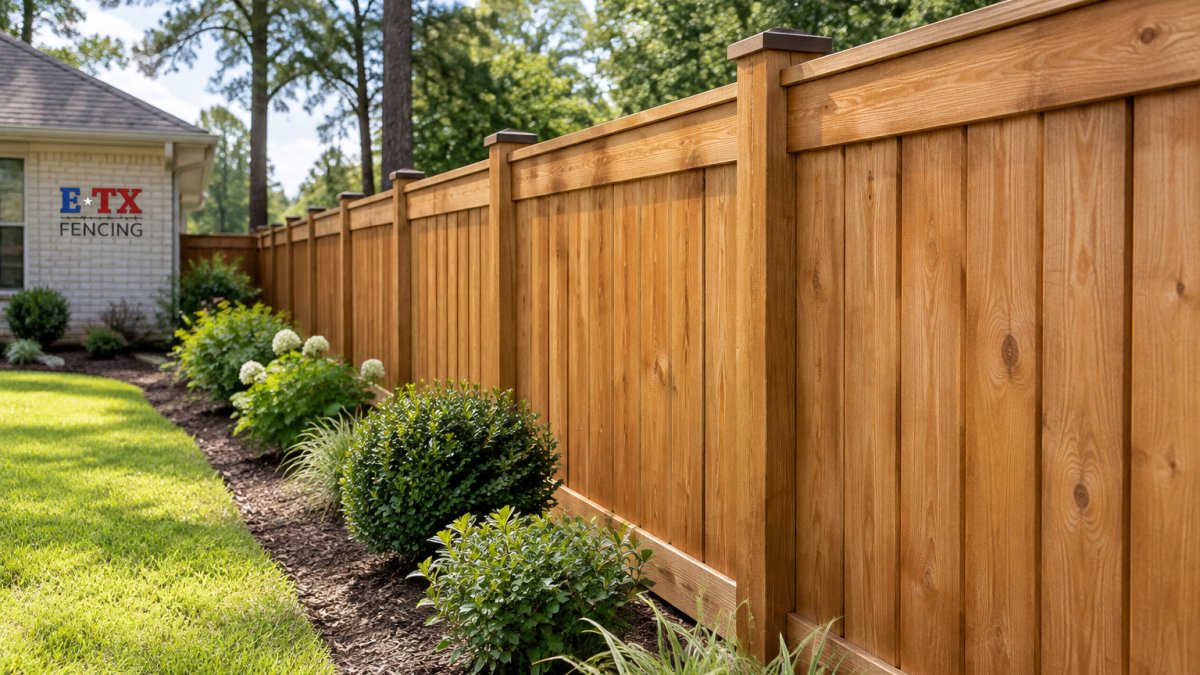
Board-on-board has alternating overlapping boards, creating a fence that looks finished from both sides and provides superior privacy and wind resistance.
Side-by-side places boards flat against each other with no overlap.
For most residential applications, board-on-board costs slightly more due to the extra material and labor for the overlap, usually 10-15% higher.
If privacy and appearance matter more, board-on-board justifies the additional investment.
Pro Tip If you're installing a fence on a property line where both neighbors will see it, board-on-board is the professional choice. It looks intentional and well-maintained from both sides, which matters for curb appeal and property value.
Estimating 200 Linear Feet of Fence Cost
A 200-linear-foot project is a common residential installation, roughly the perimeter of a quarter-acre lot. Most competitors stop at "get three quotes." The gap they leave is the arithmetic: turning 200 feet into a bill of materials, a labor estimate, and a total you can defend when bids come in.
Step 1: Fix the Specifications
Before you price anything, lock four variables so every bid is comparable:
Height: 4 ft, 5 ft, or 6 ft. Height changes board count, rail count, and wind load.
Wood: cedar, pine, or pressure-treated. Species changes both material cost and expected lifespan.
Style: board-on-board or side-by-side. Board-on-board uses more pickets because of the overlap.
Post spacing: 8 ft is common; 6 ft adds posts and concrete but improves wind resistance.
Write those four choices down. Every quote you request should repeat them back to you.
Step 2: Calculate the Material Quantities
Use the per-linear-foot takeoff from the previous section and multiply by 200. The result is a planning baseline, not a bid:
Item | Calculation for 200 linear feet | Planning quantity |
Pickets | 200 × 2.2-2.6 board feet | About 440-520 board feet |
Posts | 200 ÷ 8 ft spacing, plus 1 | About 26 posts |
Rails | 200 × 0.25-0.375 | About 50-75 rails |
Concrete | 26 posts × 1-2 bags | About 26-52 bags of 50-lb mix |
Fasteners | 200 × 20-30 screws | About 4,000-6,000 screws |
Round up for waste. A common allowance is 5-10% on pickets and rails to cover cuts, defects, and miscuts. On a 200-foot run, that is roughly 22-52 extra board feet of pickets.
Step 3: Price the Materials
Multiply each planning quantity by your local supplier price. Because lumber prices move, date your estimate and note the supplier. A quote built on last season's lumber price is not comparable to one built this week. Ask each contractor which supplier and which price date they used.
Step 4: Estimate Labor
Labor scales with linear feet, but not linearly: a 200-foot run is usually more efficient per foot than a 50-foot run because setup and travel spread over more work.
Timeline is a useful cross-check. Level ground with no obstacles might take 3-5 days for a two- or three-person crew; sloped terrain, trees, or rocky soil can extend it to a week or more.
Step 5: Add the Scope Items Competitors Leave Out
A 200-foot estimate is incomplete without these line items. Ask for each one separately:
Old-fence removal and disposal: demolition, hauling, and dump fees.
Gate or gates: a walk gate and a drive gate are priced differently from fence line.
Permits and inspections: check with your local code office; some jurisdictions require a permit for fences over a certain height.
Terrain and access: slope, rock, and tight lot lines add labor; so does carrying materials a long distance from the truck.
Step 6: Compare the Totals on the Same Basis
Put each bid into the same six-line format: materials, labor, removal, gates, permits, and finishing. A bid that is low on materials and high on labor is not necessarily worse, but you should be able to see why. If one contractor's total is far below the others, check the board size, post spacing, rail count, and concrete method before you assume it is a better deal.
Pro Tip Ask each contractor to state the estimate date, the lumber supplier, and the price date used. Two bids built on different lumber price dates are not a fair comparison, even if the specifications match.
Key Takeaway The 200-foot estimate is a repeatable calculation, not a guess: fix the specifications, run the takeoff, price the materials at a dated supplier price, estimate labor by crew-days, and list every add-on separately. That is the format that lets you compare bids honestly.
Using a Wood Fence Cost Calculator to Plan Your Budget
A fence cost calculator is a useful starting point, but online calculators can't see your property or account for terrain, soil conditions, or access challenges. What a calculator can do is compare scenarios: plug in 6-foot cedar, then 4-foot pine, and you'll see roughly how height and material affect cost. The most useful calculators take your specific measurements and wood choices; generic ones that give ranges without asking for details are usually too wide to be meaningful.
Key Cost Factors That Affect Your Board-on-Board Fence Estimate
Several variables change your total cost significantly. Understanding them helps you anticipate where your quote might be higher or lower than expected.
Terrain and Site Conditions
Level ground is the baseline for cost estimates. Sloped terrain requires adjusting board heights and sometimes using stepped installations, which adds labor and complexity. Rocky or compacted soil increases digging time, while soft or sandy soil might require deeper post holes or additional concrete, these are legitimate labor expenses, not padding. Trees, shrubs, and existing structures require working around obstacles, which takes extra time and skill.
Hidden Costs and Project Add-Ons
Your base fence estimate covers the fence itself. Several common add-ons increase the final cost:
Gate installation adds labor and material cost; a single gate is straightforward, but multiple or wide gates cost more. If your quote doesn't explicitly include gates, ask about them separately. Gravel or landscape removal might be necessary if your fence line runs through debris or existing ground cover, some contractors include this, others charge extra. Permits and inspections are required in some areas; check with your local code office and factor in the permit fee and inspection time. Staining or sealing is often quoted separately, and many homeowners seal it themselves later to save money. Removal of old fence costs extra if you're replacing an existing structure, since demolition and disposal add labor time.
Key Takeaway The difference between a base estimate and your final invoice often comes down to these add-ons. Ask your contractor to list them separately so you understand what's included and what costs extra.
Getting an Accurate Fence Estimate and Comparing Quotes
A professional estimate requires a site visit. A contractor needs to see your property, measure the perimeter, and assess ground conditions. Phone or email estimates without a visit are rough guesses at best.
When you request quotes, ask each contractor for the same information:
Total linear feet of fence
Fence height
Wood type and grade
Board-on-board or side-by-side style
Comparing apples to apples matters: if one contractor quotes cedar and another quotes pine, you're not comparing fairly. Ask for the same specifications from each, then look at the differences.
Getting an accurate board-on-board fence estimate requires understanding what drives costs and asking the right questions. When you're ready to move forward, ETX Fencing offers a free estimate that accounts for your actual property and needs. We'll walk you through the options, explain the trade-offs, and give you a clear, honest quote. Schedule your free estimate today and see why homeowners in the area trust us for quality fencing solutions.
Frequently Asked Questions
How much does a board-on-board fence cost per linear foot?
Board-on-board fence cost per linear foot depends on wood type, labor rates, and site conditions. Cedar typically costs more than pine. Installation includes posts, hardware, and labor. Pricing varies by region and contractor. Contact ETX Fencing for a free estimate tailored to your project specifications and local conditions.
What affects the cost of a board-on-board fence most?
The primary cost drivers are wood material selection (cedar versus pine), fence height and total linear footage, site terrain and ground conditions, local labor rates, and project complexity. Removing old fencing, sloped terrain, or rocky soil increases labor time and expense. Hidden costs include permits, gates, and corner posts.
Is board-on-board fencing more expensive than side-by-side?
Board-on-board typically costs more per linear foot than side-by-side because it uses more lumber and requires precise overlapping installation. The extra material and labor add 15-25% to the total project cost. However, board-on-board provides superior privacy and wind resistance, which many homeowners consider worth the premium.
How do I calculate the total cost for 200 linear feet of fence?
Multiply your linear footage by the per-foot cost (material plus labor). For 200 linear feet, factor in material costs based on wood type, height, and post spacing. Add labor hours for site prep, post installation, and board attachment. A wood fence cost calculator helps estimate these variables, but a professional quote accounts for your specific site conditions and local rates.
Schedule Your Free Estimate