Best Wood for East Texas Fences: A 2026 Guide

Table of Contents
Why Wood Choice Matters in East Texas
Cedar vs. Pressure-Treated Pine Fence: Which Performs Better
Best Wood for Fence Posts and Ground Contact
Why ground contact is a different problem than above-ground boards
Read the treatment label, not just the species
The East Texas soil and drainage factor
Hardware and fasteners
Species options for posts
The hybrid approach most installers use
Other Wood Species Worth Considering
Redwood
Cypress
Douglas Fir
How Long Does a Wood Fence Last in This Climate
Wood Fence Stain and Sealer: Protecting Your Investment
Making Your Final Decision
Material cost versus installed cost
Lifecycle cost: the number most homeowners skip
A decision framework by priority
Questions to ask before you commit
A note on installation quality
Frequently Asked Questions
Last Updated: October 16, 2026
Why Wood Choice Matters in East Texas
The best wood for east texas fences isn't just about aesthetics, it's about survival. High humidity, intense summer heat, and acidic soil break down inferior materials quickly.
East Texas throws 45+ inches of annual rain, 90°F+ summers, and acidic soil at fences, accelerating rot, warping, and insect damage in unsuited wood.
Selecting the best wood for east texas fences means knowing which species resist moisture, how ground contact affects durability, and which treatments actually protect, the difference between five years and fifteen.
Cedar vs. Pressure-Treated Pine Fence: Which Performs Better
But cedar is softer than pine, so boards dent or splinter more easily, and it costs roughly 40-60% more.

Pressure-treated pine uses copper-based preservatives to resist decay and insects, and modern formulations are safer than older arsenic-based treatments.
For fence posts, pressure-treated pine outperforms cedar. Posts sit in constant ground moisture, and pressure-treated wood's chemical saturation makes it the safer choice for ground contact.
Feature | Cedar | Pressure-Treated Pine |
Natural rot resistance | High (oils repel decay) | Moderate (chemical treatment required) |
Insect resistance | Good | Excellent |
Cost | Higher | Lower |
Appearance | Warm reddish tone | Greenish or brownish tint |
Maintenance | Seal every 2-3 years | Seal every 3-5 years |
Ground contact durability | Moderate | Excellent |
Lifespan (sealed) | 15-20 years | 20-25 years |
Best Wood for Fence Posts and Ground Contact
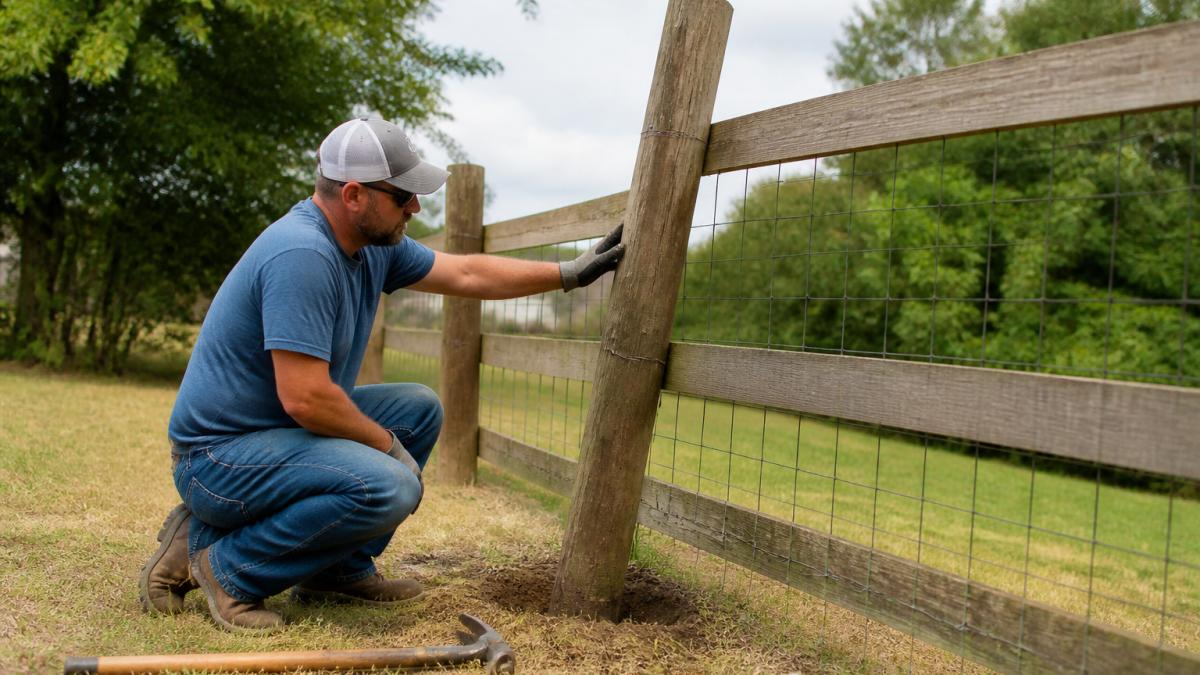
Fence posts carry the structural load and endure constant soil moisture, wet-dry cycling, temperature swings, and soil-borne insects. The best wood for fence posts in east texas must survive ground contact first, everything above grade is secondary.
Why ground contact is a different problem than above-ground boards
Boards dry out between rains; buried posts sit in nearly continuous moisture with limited oxygen and direct access for decay fungi and termites. That's why the same species can excel as a board and fail as a post. The question isn't "which wood is rot-resistant", it's "which wood is rated for ground contact."
Read the treatment label, not just the species
Pressure-treated lumber is rated by intended use, stamped on the end tag of every board. The ratings that matter for fences:
Above-ground contact (often labeled "UC3B" or "above ground"), intended for boards, rails, and pickets that stay dry. Not appropriate for posts.
Ground contact (often labeled "UC4A" or "ground contact"), intended for wood that touches or is buried in soil. This is the minimum for fence posts.
Heavy-duty ground contact / permanent wood foundation (UC4B, UC5), heavier retention for severe exposure. Overkill for most residential fences but relevant in low, poorly drained spots.
A common mistake is buying cheaper above-ground-rated lumber for posts because it looks identical. Retention is lower and the post can fail years earlier. Ask for ground-contact-rated material by name and check the end tag.
The East Texas soil and drainage factor
Local soils tend toward heavy clay with slow percolation, and many lots hold water after heavy rain. That can matter more than species: a ground-contact-rated post in a well-drained, concrete-set footing outlasts a premium species post sitting in a clay bowl that never dries.
Practical steps that make the biggest difference:
Set posts below the frost line and deep enough for lateral load, typically one-third of the above-ground height plus a few inches, and never less than about 24 inches for a standard 6-foot fence.
Use concrete footings that crown above grade so water sheds away from the post instead of pooling at the base.
Keep the post base out of standing water, if a hole fills with water before the concrete goes in, pump it out or the concrete will be compromised.
Hardware and fasteners
Ground contact also attacks metal. Standard steel fasteners rust through in humid conditions, staining wood and weakening joints. Use hot-dip galvanized or stainless steel near or below grade; stainless costs more but eliminates rust stains on cedar and treated pine.
Species options for posts
Pressure-treated pine (ground-contact rated), the practical default. Widely stocked, affordable, and proven in humid climates when the rating is correct.
Pressure-treated Douglas fir, denser and stronger for high structural loads, but confirm the ground-contact rating.
Cedar or cypress posts, natural decay resistance helps, but untreated posts in direct soil contact still fail faster than properly treated pine here. Look for one rated for ground contact, not just sold as "cedar post."
The hybrid approach most installers use
A common professional pattern pairs pressure-treated, ground-contact-rated posts with cedar or cypress boards above grade, durable, inexpensive material where conditions are worst, attractive naturally resistant material where it's visible and dries between rains.
Watch Out Avoid untreated lumber for any post in direct soil contact. Natural decay resistance in cedar or cypress is not a substitute for a ground-contact treatment rating in this climate. The savings disappear when posts need replacement in 5-7 years instead of 20+.
Other Wood Species Worth Considering
Beyond cedar and pressure-treated pine, several alternatives deserve consideration depending on your needs and budget.
Redwood
Redwood is native to California and the Pacific Northwest, making it less available and pricier in East Texas. Like cedar, it contains natural decay-resistant oils and is slightly denser, resisting physical damage better.
The challenge: redwood's natural resistance works best in dry climates. In East Texas humidity it still requires regular sealing to prevent graying and moisture absorption, and the cost premium over cedar often isn't justified here.
Cypress
Cypress grows in the southeastern U.S. and suits humid climates naturally, with decay resistance comparable to cedar, a more uniform grain, and better resistance to warping.
However, cypress availability in East Texas is limited, pushing costs above pressure-treated pine but comparable to premium cedar, and true bald cypress is harder to source than pond cypress. It weathers silver-gray like cedar and performs well for boards and posts, though it still benefits from sealing.
Douglas Fir
Douglas fir is strong and straight-grained, popular for structural applications. It's less naturally decay-resistant than cedar or cypress, but pressure-treated Douglas fir performs well and is denser than pine, resisting dents and splinters better.
Douglas fir is often cheaper than cedar but costs more than pressure-treated pine, and it's readily available in Texas lumber yards. It works well for utilitarian or ranch fencing where durability matters more than aesthetics.
How Long Does a Wood Fence Last in This Climate
Fence longevity depends on wood species, installation quality, and maintenance.
Pressure-treated pine posts with cedar boards, sealed regularly, often reach 20-25 years before major replacement becomes necessary.
The biggest threat isn't rot alone. East Texas humidity compounds problems: wood swells and shrinks, fasteners rust, and posts shift in softening soil.
Regular inspection catches problems early: check posts for soft spots, gaps between boards, and fastener corrosion.
Wood Fence Stain and Sealer: Protecting Your Investment
Sealing is where most homeowners fail.
Water is wood's enemy: unsealed wood absorbs moisture, swells, and creates conditions where decay organisms thrive.
Cedar requires sealing every 2-3 years to maintain appearance and protection. Pressure-treated wood can go 3-5 years between applications, though sealing sooner maintains better appearance.
Pro Tip Choose a semi-transparent stain over solid color. It allows the wood grain to show through while providing UV protection. Solid stains hide wood beauty and can peel more noticeably as they wear. Semi-transparent stains fade gradually and blend better when you touch up sections.
The process matters as much as the product. Pressure wash to remove dirt, mold, and old sealer residue, then let the wood dry completely (typically 48 hours). Apply on a dry day with no rain forecast, and use two thin coats, one thick coat pools and finishes unevenly.
Quality sealers cost more upfront but last longer; budget options may need resealing annually.
Making Your Final Decision
Choosing the best wood for east texas fences means balancing four things: how long the fence must last, how much maintenance you'll actually do, how it needs to look, and what you'll spend up front versus over its life. The most useful comparison is total cost of ownership.
Material cost versus installed cost
Material price is only part of the picture; installed cost includes posts, concrete, fasteners, labor, and site prep. As a general pattern, a contractor-installed wood privacy fence runs roughly $20 to $45 per linear foot depending on species, height, and site conditions, with cedar at the higher end and treated pine at the lower.
Those are broad ranges, not quotes. Local pricing, height, gate count, terrain, and old-fence removal all move the number. If you're ready to move forward with a project, a Free Estimate can give you accurate pricing based on your specific needs and site conditions.
Lifecycle cost: the number most homeowners skip
A fence isn't a one-time purchase, sealing, repairs, and eventual replacement are part of the cost. Compare species by annualized cost:
Pressure-treated pine, lower up-front cost, reseal every 3-5 years, expect roughly 20-25 years with proper installation and maintenance.
Cedar, higher up-front cost, reseal every 2-3 years, expect roughly 15-20 years in this climate.
Hybrid (treated posts, cedar boards), middle up-front cost, maintenance driven by the boards, post life driven by the treatment.
Run the math on a 150-foot fence: the lowest sticker price isn't always the lowest cost per year once you add resealing cycles and replacement timing. A fence costing 30% more up front but lasting 40% longer with one fewer reseal can come out ahead.
A decision framework by priority
Priority | Best fit | Why |
Lowest up-front cost | Pressure-treated pine throughout | Cheapest material, widely stocked, adequate performance with maintenance |
Best appearance | Cedar boards on treated posts | Natural color and grain above grade, durability below grade |
Lowest maintenance | Pressure-treated pine, sealed on schedule | Longer reseal interval than cedar |
Longest service life | Treated posts + cedar or cypress boards, sealed regularly | Combines ground-contact durability with naturally resistant boards |
Ranch / agricultural use | Pressure-treated pine throughout | Cost-efficient, appearance is secondary |
Premium natural look | Cypress or cedar throughout, with treated posts | Uniform grain, good stability, higher cost and maintenance |
Questions to ask before you commit
What's the treatment rating on the posts? Ground contact, not above-ground.
What's the reseal interval for this species in this climate? Get it in writing so you can budget.
Are fasteners galvanized or stainless? Rust stains show up fast on cedar.
A note on installation quality
Material choice sets the ceiling on fence life; installation determines whether you reach it. Shallow posts, footings that pool water, boards nailed tight with no room to move, and mismatched fasteners shorten the life of even premium wood. If you're hiring out, ask how posts are set and what fasteners are used, the answers tell you more than the species name on the estimate.
Key Takeaway The species decision is really a trade between up-front cost, maintenance effort, and expected lifespan. Pick the combination that matches how long you plan to stay, how much upkeep you'll do, and how much the appearance matters, then make sure the installation protects that investment.
Frequently Asked Questions
What type of wood is best for an outside fence in East Texas?
Cedar and pressure-treated pine are the top choices for East Texas. Pressure-treated pine offers superior rot and insect resistance due to chemical treatment, making it ideal for humid, wet conditions. Cedar provides natural decay resistance and better appearance but requires regular sealing. Redwood and cypress are alternatives with natural durability, though cost and local availability may limit options. Your choice depends on budget, maintenance commitment, and whether posts will contact soil directly.
Is cedar or pressure-treated pine better for a wood fence?
Pressure-treated pine outperforms cedar in ground contact and high-moisture areas due to its chemical protection against rot and insects. Cedar resists decay naturally and looks more attractive but needs regular staining and sealing to maintain appearance and longevity. For posts and areas exposed to soil moisture, pressure-treated pine lasts longer with less maintenance. For visible boards where appearance matters, cedar offers better aesthetics if you're willing to maintain it every 2-3 years.
How often should a wood fence be stained or sealed?
Most wood fences in East Texas need staining or sealing every 2-3 years due to high humidity and rainfall. Pressure-treated lumber lasts longer between applications than cedar. Cedar requires more frequent maintenance to preserve color and prevent weathering. The climate's moisture accelerates wood degradation, so regular sealing protects against rot, insects, and UV damage. Neglecting maintenance shortens fence lifespan significantly, making routine care essential for long-term durability.
How does East Texas weather affect a wood fence?
High humidity, heavy rainfall, and temperature fluctuations create challenging conditions for wood fences. Moisture penetration causes rot, warping, and swelling, while heat and sun exposure fade color and weaken wood fibers. Poor soil drainage compounds ground contact issues, accelerating post decay. These factors make pressure-treated wood or naturally durable species like cedar and cypress better choices than untreated pine. Proper drainage, regular sealing, and selecting rot-resistant species are critical to fence longevity in this climate.
Schedule Your Free Estimate